Wednesday, March 19, 2014

A Small Place: Tourism


Tourism is a facet of neo-colonialism because although the country superficially has its independence, its economy, and therefore its existence, is still dependent on the people visiting from first-world, ex-colonizing nations.  Most Caribbean nations’ economies are dominated by tourism and in that sense reliant on the same countries that once oppressed and enslaved them. In some ways, that oppression is ongoing today. Polly Patullo writes of the banning of local peoples from their own countries’ beaches, restaurants, hotels, and more in the pursuit of a more tourist friendly area (105).  This strengthens the inferiority complex present in those of a postcolonial nation because it preaches that they are not good enough or as good as the tourists. As Jamaica Kincaid puts it, people become “ugly” when they are tourists because they compare their living conditions and culture to that of the local people and often find themselves superior: “Their ancestors were not clever in the way yours were and not ruthless in the way yours were” (17).  These are the ideals that began colonialism in the beginning. The idea that the colonizers were helping the native people become more civilized and more like them. This impression lingers on even now, and that superiority complex is fueled by tourism. Many tourists are unaware or apathetic to the negative effects, especially social issues, that their presence causes. That is their privilege due to where they were born or the color of their skin. Because they are convinced of no wrong doing, this system of tourism and control is self-perpetuating and very difficult to be removed.


Within the last year, mass riots and protests have occurred in Brazil due to the amount of money spent on the FIFA World Cup and the 2016 Olympic Games instead of on bettering the nation's growing poor population. The government is also clearing out homes of residents to make room for the incredible number of tourists coming for the games. Like in Antigua, the Brazilian government is only concerned with cleaning up the areas that tourists will be visiting and not the areas that really need the help. Some protesters showed hate for the tourists that come to Brazil for the games because tourists tend to believe that their presence will better the nation through an economic boost, and therefore deny the harm that they cause. 


Discussion Questions
  1.  How do Kincaid’s comments on language relate and expand on Fanon’s ideas in “The Negro and Language” (32)?
  2. Kincaid writes that Antiguans assumed the English were ‘ill-mannered’ but not racists (34). Why would they not realize that race was an important issue to the English?
Fact:  Tourism accounts for nearly 60% of Antigua’s GDP, therefore dominating the economy.
Works Cited                                                                                        
“Antigua and Barbuda.” The World Factbook.  The CIA, n.d. Web. 15 March 2014.

Recommended Literature
“Like an Alien in We Own Land” by Polly Patullo

Wednesday, March 5, 2014

The Harder They Come: American Influence


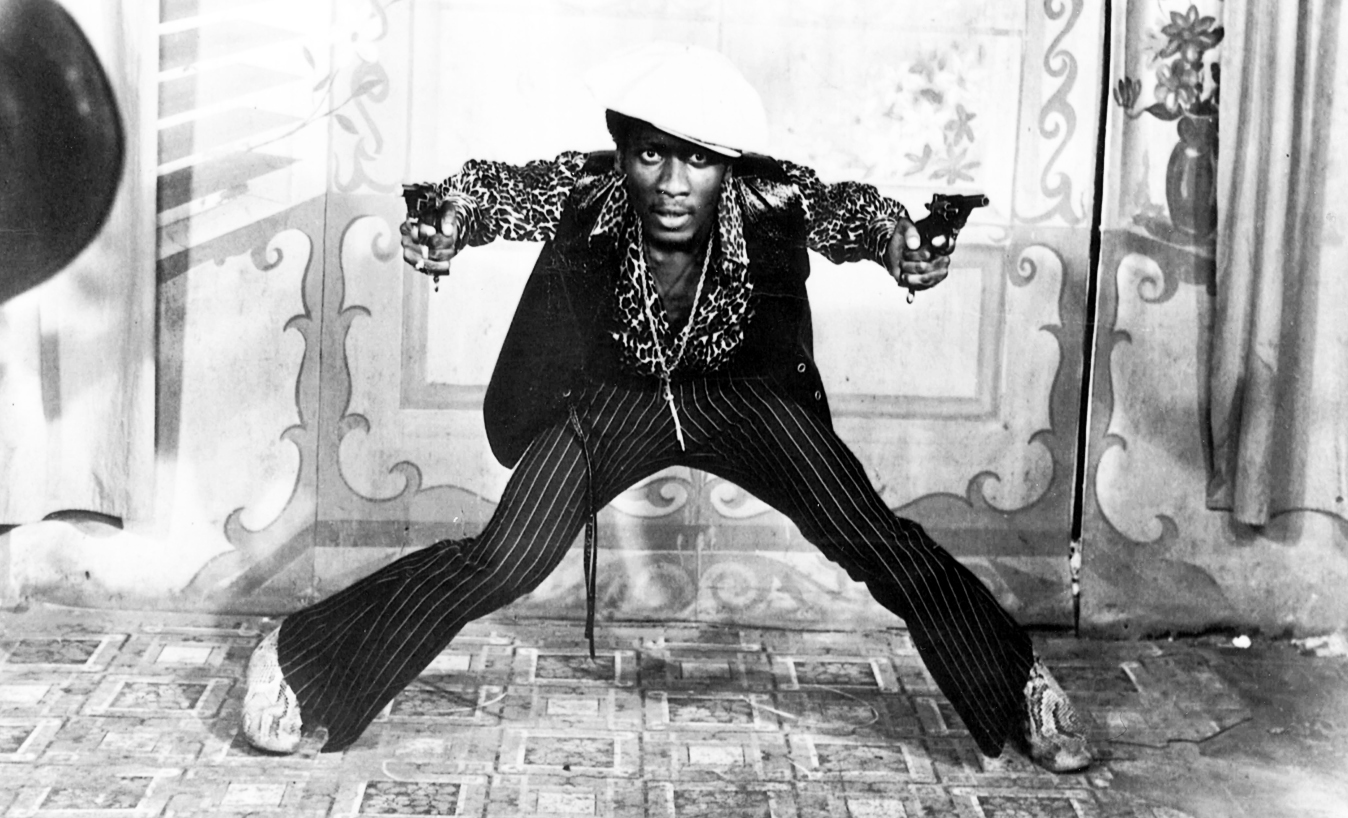
    In the film The Harder They Come, the main character, Ivanhoe Martin, is largely influenced by American culture and media while also drawing upon images from Jamaican music, reggae, which leads to his character being a combination of negative badness and positive badness. Positive badness results from political repression,
is used to bring about a constructive change, and was utilized by antislavery freedom fighters. However, negative badness, while popular in American culture and film, is destructive and generally unhelpful. Martin is torn between these two views of masculinity and often contradicts himself because of this split. When the two views meet, representing cultural nationalism and cultural imperialism, the product is a “combination of race pride and criminality” that is neither Jamaican nor American (Thomas 95). Thomas discusses literary critic Carolyn Cooper’s idea that the Jamaican filmmakers are so strongly influenced by American media that they then produce media that reflects it, creating a self-enforcing loop that continues to expose Jamaican youth to American beliefs of masculinity: “The influence of U.S. versions of heroic masculinity and gun violence are inescapable…Jamaican filmmakers cannot help but reproduce ‘these distorted images,’ which ‘are greedily imbibed by gullible Jamaican youth” (94). In the beginning of the film, Martin represents that naïve, young Jamaican that starts out singing about oppression and fighting against those forces, yet he quickly deteriorates into a self-serving, violent gunslinger like that of an American Western film. The Harder They Come serves an example of the negatives and positives that come with following American ideals. The film seemed to be critical of the violent American influences on youth in Jamaica, but appeared to have the opposite of its wanted effect (Thomas 94). Martin appeared heroic to audiences despite, or maybe because of, his Americanized actions. In “Spectacular Bodies”, Thomas refers to political scientist Obika Gray’s belief that because Jamaicans associate America with a mostly material and higher class of living, they seek to escape there through any outlet including film (96). Until these ideas become more separated, Jamaica is going to continue to be strongly influenced by American media and more accepting of the negative badness that is promoted by it.


Ivanhoe carries a resemblance to many American Western movie protagonists. Several start with good motives only to descend into unlawful ways. Many fight oppression in one form or another. 

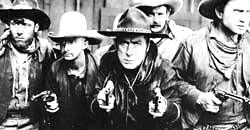
The Harder They Come seems to present a satiric view of American influence on Jamaicans by showing flashes of an audience, possibly in a movie, during the final shootout of Ivanhoe Martin. The final scene of The Harder They Come mimics the shootout scene in many famous Westerns, especially Butch Cassidy and the Sundance Kid.  The spectacle of the scene draws attention to the influences from American media. 

Discussion Questions:
  1.  Explain the difficulties that arise when a newly independent nation tries to redefine their culture separate from Empire while still maintaining political and economic ties to the colonizer (97).
  2. Why do most reggae songs mention slavery if not as a reminder of the abuse they received (109).
Fact:  Although emancipation of slaves in Jamaica was granted in 1834, many slaves had to endure apprenticeships in order to gain their freedom. The day apprenticeships ended in 1838 was the day the slaves were truly freed.
Works Cited                                                                                        
Tortella, Rebecca. The Road to Freedom.  Jamaica Gleaner, n.d. Web. 2 March 2014.

Recommended Literature:

"Spectacular Bodies" by Deborah Thomas
------------------------------------------------------------------------------------------------------------
Jimmy Cliff, at the age of 62, singing "The Harder They Come" written for the movie in 1972, when he was 24.


Wednesday, February 19, 2014

School Days: Language


        By forcing the children to speak a language that was incongruent to their surroundings, the colonial school in School Days by Patrick Chamoiseau broke the children’s cultural ties to their homeland and taught the correlation between French and a higher-class society.  The only opportunity for education for Martiniquais was in a French colonial school that taught students to learn and accept French culture over their own.  Creole and Creolisms were banned from the classrooms, and the use resulted in harsh and violent punishment (Chamoiseau 65). Students mocked and bullied each other over their language, reinforcing the ideas pushed on them in the classroom. These actions taught the children that their native language and native mannerisms were below that of the French, and that if they could not speak in French, then their words were worthless. Fear and embarrassment caused many of the students to retreat into silence; “His inner voice grew ashamed; his chattiness deteriorated into an illicit activity” (Chamoiseau 65). The students began to relate Creole with vulgarity and delinquency (Chamoiseau 66). Fanon summarizes this effect, stating, “ Every colonized people…in whose soul an inferiority complex has been created by the death and burial of its local cultural originality finds itself face to face with the language of the civilizing nation” (18). Language is a tremendous part of culture and the degradation of it leads to the loss of cultural identity. When taught that French is superior to Creole for so long, the Martiniquais students came to believe it and to surrender their identities to this belief.  The effect of colonizing the mind is so much stronger and lasts longer than colonizing a nation.  For many nations, even several decades after independence is declared from Empire, the process decolonizing the mind is still ongoing.

Richard Dowden, a British Journalist specializing in African issues, briefly discusses colonizing of the mind and the effects it has had on Africa's history. 


Professor Errington of Yale University speaks about the possibility of losing smaller, less spoken languages in place of more dominant ones. He says that many kids recognize that they must know the dominant language in order to get the jobs they want and to succeed in life. In School Days, the narrator discovers the same principle and decides to learn French, not to please his teacher, but so that he can do what he desires with his life. Errington expresses a fear that soon many small languages will die out and be lost forever.

Discussion Questions:

  1.  Chamoiseau is an unreliable narrator and adds doubt to his story through uses of the word “probably” (29) and rhetorical questions (39). Does this add a realistic effect to his memoir or does it draw away from the overarching effect of a novel?
  2. Chamoiseau often refers to the Repondeurs throughout the novel. What is the purpose of these voices?
Fact: Martinique, the country in which Chamoiseau grew up, is still not an independent nation. Instead it is ruled as an overseas department or a region of France.

Works Cited            
Cornevin, Robert. Martinque.  Encyclopedia Britannica, 10 May 2013. Web. 10 February 2014.


Recommended Literature

Black Skin, White Mask, "The Negro and Language" by Frantz Fanon

Wednesday, February 5, 2014

Abeng: Representation


Abeng is an animal horn traditionally from Ghana.
It was used by the Maroon Army in Jamaica
 as a means of communication.
          For the majority of Abeng, Clare struggles to determine her identity and her sexuality. Jamaican culture and media lacks representation of female homosexuality and of mixed race people. 

At the end of the novel, Clare and her friend are interrupted by a man while skinny-dipping. She fires a warning shot with her gun, but accidentally hits and kills a bull. 


Clare fires the gun out of fear, not anger, towards the cane-cutter. She is slightly concerned about the safety of herself and her friend, yet she is far more afraid that he will tell Miss Mattie what he had seen. Clare is finally grasping how she really feels about Zoe, and she is frightened that the cane-cutter would recognize her feelings, which leads her to be far more defensive than necessary and to fire the gun. Although anger stemming from being interrupted may have played a role in the shooting, it was not the main cause. After the incident, Clare concludes that the man would have never harmed her; therefore, she does not realize why she felt so frightened by his presence (124). To her, the punishment for killing the bull is far better than the conclusions the cane-cutter might have come to. By giving the examples of Clinton and Clare’s uncle Robert, Cliff makes it clear that homosexuality is looked down upon in Jamaica during that time period. However, the only examples Clare ever saw of homosexuality were men, and so it is not quite clear if she realizes that women can be gay as well, which just confuses her more (126). Cliff hints at Clare’s sexuality in different ways throughout the book. When discussing Robert, Clare becomes uneasy with the idea that she identifies with him and that she too will disappoint her family: “She did not know why her fear of him [Robert] was so strong” (126). Because of her family’s influence, she views homosexuality as a disease and something to avoid completely, even though she does not understand why she is supposed to feel that way. Her fear of being accused by this cane-cutter of having a relationship with Zoe is reinforced by the way her family treats and talks about Robert and his eventual fate. She knows exactly how her family would treat her if her feelings were exposed, and seeing as that is her main source of identity, she could not handle rejection from them. She lives in a world where being gay is one of the worst things to happen to a person and to a family, and it results in isolation and mockery. These are the things that frighten Clare in that moment, but because homophobia is so ingrained in her society, she cannot seem to place the cause of her fears.


American media has struggled with queer representation in film for the past century. The film The Celluloid Closet discusses this inequality through examples of film clips as well as interviews with gay and straight actors. The Celluloid Closet shows the evolution of representation and analyzes the effects that representation on youth. MediaSmarts writes more about the film HERE.


The issue of necessary representation is not confined to Jamaica. In fact, lack of representation of a country's native people is extremely common in postcolonial nations. 


 Chimamanda Adichie is a native Nigerian writer talking about her cultural growth. Nigeria was colonized by the British in the late 19th century. She mentions the idea of a "single story" - the bias based on only one impression. It is important because colonialism had created a certain perception of certain cultures and decolonization of the mind is still ongoing. Biases and stereotypes that are constantly forming and spreading negatively impact us by creating an idea of superiority. This idea justified imperialism and colonialism to the colonized and the colonizers. Her story also brings notice to the importance of representation of people in books, television, and other form of media.  

Discussion Questions
  1. The process of ‘colonizing the mind’ involves establishing a way of thinking that persuades the colonized to believe the values and opinions of the colonizers (20). Did this perpetuate imperialism and assist the nations in ruling the colonies?
  2. To signify a change in the attitudes of critics, the term ‘Commonwealth’ was exchanged for ‘postcolonial’ (38-39). How did their views change, and why do you think this change occurred? Does postcolonialism mean the same thing as ‘after colonialism’, and if not how are they different?
  3. Why do you think Clare forms such a connection with Anne Frank (Cliff 79)? What are the similarities and differences between the two?
  4. What is the relationship between nationalism and imperialism (McLeod 80)? How did Postcolonialism affect nationalism within colonized nations?
  5. One criticism of Said’s Orientalism is that it ignores resistance within the West to colonialism and the harsh treatment of slaves (58). Do you think that Said ignored this in order to strengthen his essay or because this faction was so insignificant at the time? Do you think we’re criticizing this issue now in order to make the West look better in hindsight?
  6. In “The Overland Mail”, what is the effect of associating the British exiles with the daylight and the native, natural India with night (1. 3, 1. 28)? What other slights does Kipling hint at in his poem? During your first read of the poem, did you interpret Kipling as pro-Empire?


Facts:
Britain has invaded nearly 90 percent of the world’s countries either due to colonization, war, or military presence.

The Maroons and the English planters signed a peace treaty in 1738. This was the first treaty of its kind because it showed equality between the natives and the English. The Maroons were allowed 1500 acres of land, freedom to hunt where they chose, and the ability to enforce justice on any Englishman who injured them in any way in return for pacification.


Edward Said was born in Jerusalem but attended British schools in Jerusalem and Cairo before moving to the United States. He felt out of place in the US, which led to his interest in the Middle East and Orientalism.


Works Cited 

“The Maroons”. Slave Resistance – A Caribbean Study. University of Miami. n.d. Web. 29 January 2014.

“Edward Said – Biography”. The European Graduate School. n.d. Web. 22 January 2014.


Recommended Literature


  • Beginning Postcolonialism, "From 'Commonwealth' to 'postcolonial'" and  “Reading colonial discourses” and “Nationalist Representations” by John McLeod
  • “The Overland Mail” by Rudyard Kipling